Top 10 Hacks for Keeping Your Car Organized with Kids
Share This Article
If you've ever reached into your car's backseat and discovered a petrified chicken nugget wedged between the seats, a sticky juice box lid adhered to the floor mat, or a collection of broken crayons melted into the upholstery—you're not alone. The family car has a remarkable ability to transform from a clean vehicle into a mobile disaster zone in what feels like minutes.
But here's what many parents don't realize: the state of your car isn't just about aesthetics or convenience. Research from DePaul University psychologist Dr. Joseph Ferrari shows that clutter—in any environment—is directly correlated with increased stress, reduced life satisfaction, and impaired cognitive function. For children, who spend significant time in the car during formative years, a chaotic environment can affect their sense of security and even model disorganization as a norm. The good news? With the right systems in place, maintaining an organized family car becomes almost effortless—and the benefits extend far beyond a cleaner vehicle.
"Clutter is an overabundance of possessions that collectively create chaos and disorderly living spaces. The more clutter you have, the lower people report life satisfaction."
— Dr. Joseph Ferrari, Psychologist, DePaul University (APA)
Why Car Organization Matters More Than You Think
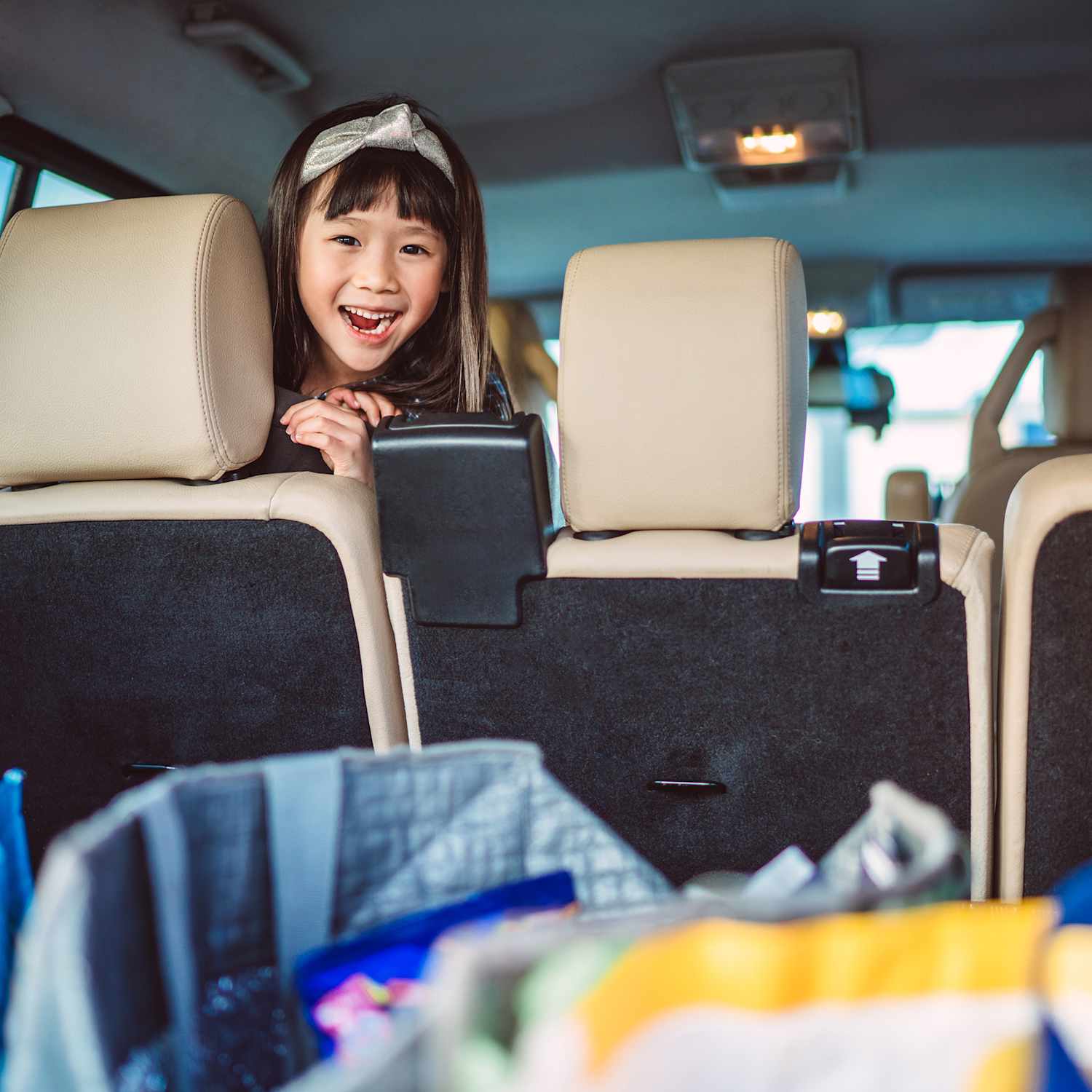
Let's start with a truth that might surprise you: the average American family spends nearly 300 hours per year in the car. That's more than twelve full days—time spent commuting to school, driving to activities, running errands, and taking family trips. For many families, the car is the second most-used space after the home itself.
This matters because our environments shape our mental states. Research published in the Journal of Environmental Psychology found that people who described their homes as "cluttered" or full of "unfinished projects" were more likely to be depressed and fatigued than those who described their homes as "restful" and "restorative." The same principles apply to any space where we spend significant time—including our vehicles.
For children, the impact may be even more significant. Young brains are constantly absorbing information about how the world works. When children regularly experience a chaotic car environment—where things are lost, spills aren't addressed, and there's no system for managing belongings—they internalize that chaos as normal. Conversely, when children experience organized spaces with clear systems, they learn that organization is achievable and valuable.
The Psychology of Organized Spaces
Research shows that organized environments reduce cognitive load—the mental effort required to process information. For children, this means an organized car allows them to focus on conversation, observation, and learning rather than navigating chaos. It also reduces the stress hormones associated with cluttered environments.
The Foundation: Mindset Before Systems
Before we dive into specific products and hacks, let's address the fundamental shift that makes car organization sustainable. Most organization attempts fail not because of inadequate products, but because of unrealistic expectations and missing systems.
Accept that perfection isn't the goal. Your car will get messy. Children will spill things, drop crumbs, and leave items behind. The goal isn't to prevent this—it's to create systems that make cleanup quick and painless. When you accept that mess is inevitable but manageable, you remove the frustration that leads to giving up entirely.
Involve your children in the system. Children as young as two can participate in car organization. Give them ownership of specific tasks: putting their water bottle in its designated spot, placing trash in the car garbage, gathering their belongings before exiting. When children are part of the system, they're invested in maintaining it.
Schedule regular resets. The most organized families I know don't have cleaner cars because they're more vigilant—they have cleaner cars because they've scheduled regular maintenance. A weekly five-minute car cleanup, done consistently, prevents the accumulation that makes organization feel overwhelming.
The Two-Minute Rule
Borrowed from productivity expert David Allen: if something takes less than two minutes, do it now. Applied to car organization, this means removing trash each time you exit, wiping up spills immediately, and addressing small messes before they become big problems.
"For every minute spent organizing, an hour is earned."
— Benjamin Franklin
The 10 Essential Strategies
Now let's get practical. These ten strategies are organized from foundational (start here) to advanced (add these once your basic systems are working). Each one has been tested by real families and addresses a specific pain point.
Create a Dedicated Trash System
The problem: Wrappers, tissues, and small garbage accumulate because there's nowhere convenient to put them. Children especially will drop trash wherever they are rather than holding it until they find a garbage can. The solution: Install a dedicated car trash container within reach of every passenger. The best options attach to the back of a headrest, hang from the gear shift, or fit in a door pocket. Look for containers with a lid to contain odors and prevent spills. Why it works: When disposing of trash requires zero effort, it happens automatically. The key is placement—trash containers must be accessible without unbuckling or stretching. For backseat passengers, a headrest-mounted option works best. For the front, a small container that fits in the center console or door pocket is ideal. Pro tip: Line your car trash container with small plastic bags (grocery bags work perfectly). When the bag is full, simply remove and replace. This takes seconds and prevents the container itself from getting dirty.
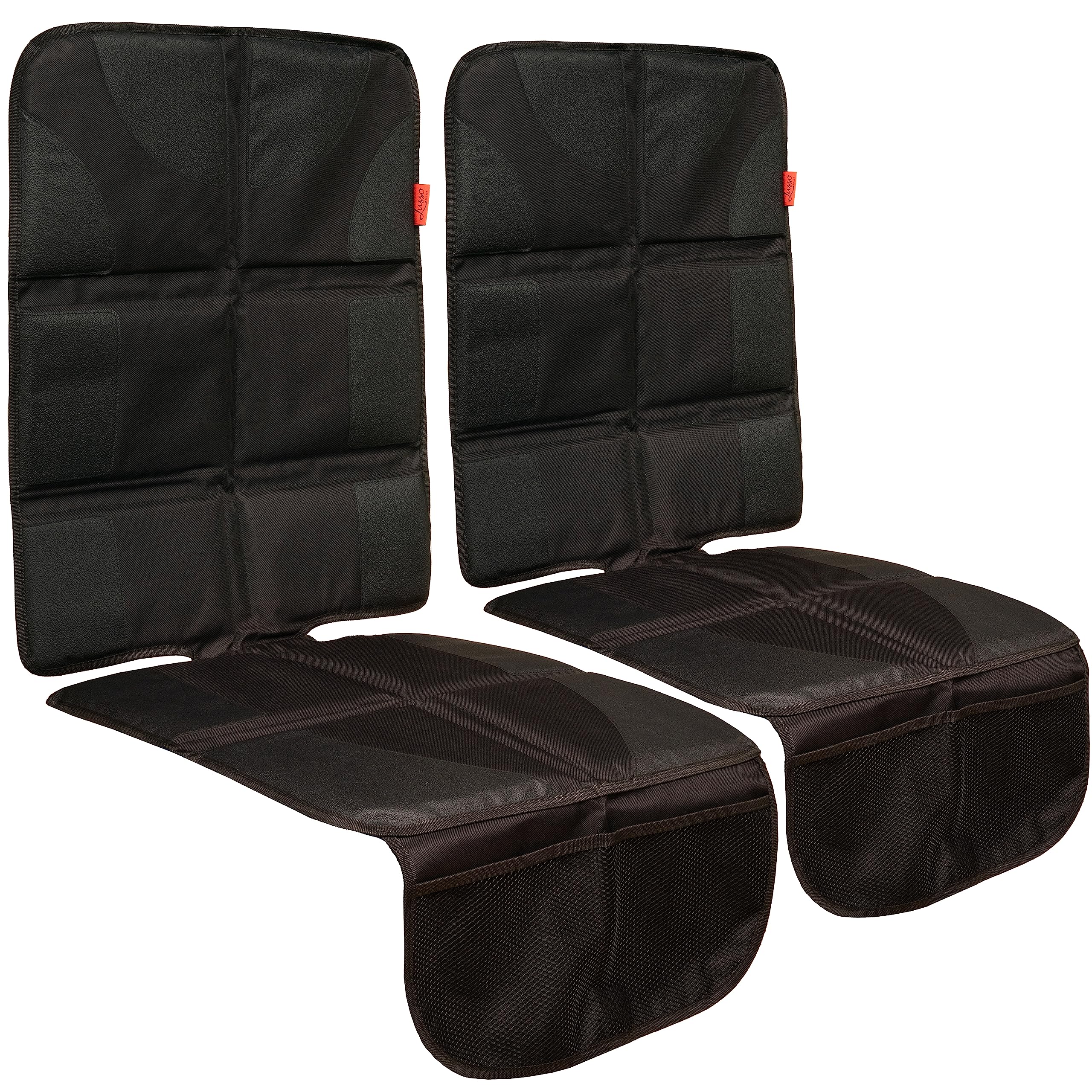
Invest in Quality Seat Protectors
The problem: Car seats, snacks, and shoes take a tremendous toll on vehicle upholstery. Stains, scuffs, and wear accumulate quickly, making the car feel perpetually dirty even when it's technically clean. The solution: Install seat protectors under car seats and kick mats behind front seats. Quality protectors are waterproof, easy to wipe clean, and protect against both stains and physical damage. Why it works: Prevention is always easier than remediation. A good seat protector catches crumbs, absorbs spills, and takes the impact of kicking feet—all while being removable and washable. When the protector gets dirty, you clean or replace it rather than dealing with permanent upholstery damage. What to look for: Waterproof backing, non-slip grip, full coverage (including the back of the seat for kick protection), and machine-washable materials. Avoid thin, flimsy protectors that bunch up or shift—they create more problems than they solve.
Implement the "Exit Protocol"
The problem: Items accumulate in the car because no one takes responsibility for removing them. Jackets, toys, school papers, and random objects pile up until the car feels like a storage unit. The solution: Establish a non-negotiable exit protocol: every person takes everything they brought into the car when they leave. No exceptions. Make it a family rule that's as automatic as buckling seatbelts. Why it works: This single habit prevents 80% of car clutter. Most car mess isn't from spills or trash—it's from items that were brought in and never removed. When "take your stuff" becomes automatic, clutter simply doesn't accumulate. Making it stick: For young children, do a verbal check before they unbuckle: "Do you have your water bottle? Your backpack? Your jacket?" For older children, make it their responsibility with natural consequences—if they leave something in the car, they don't have it until the next car trip.
Create Activity-Specific Kits
The problem: Parents end up bringing random items for car entertainment, resulting in loose toys, scattered art supplies, and missing pieces everywhere. The solution: Create contained activity kits that stay in the car. Each kit should be self-contained in a zippered pouch or small container, with everything needed for that activity inside. Kit ideas: - Coloring kit: Small coloring book, crayons (not markers—they dry out and stain), clipboard for hard surface - Audio kit: Kid-friendly headphones, loaded tablet or music player - Quiet toy kit: Magnetic drawing board, small figurines, travel-size games - Snack kit: Reusable containers with non-perishable snacks, napkins, wet wipes Why it works: Contained kits prevent the entropy of loose items. When everything has a designated container, cleanup is simple—just put items back in their kit. Kits also make it easy to rotate activities to maintain novelty.
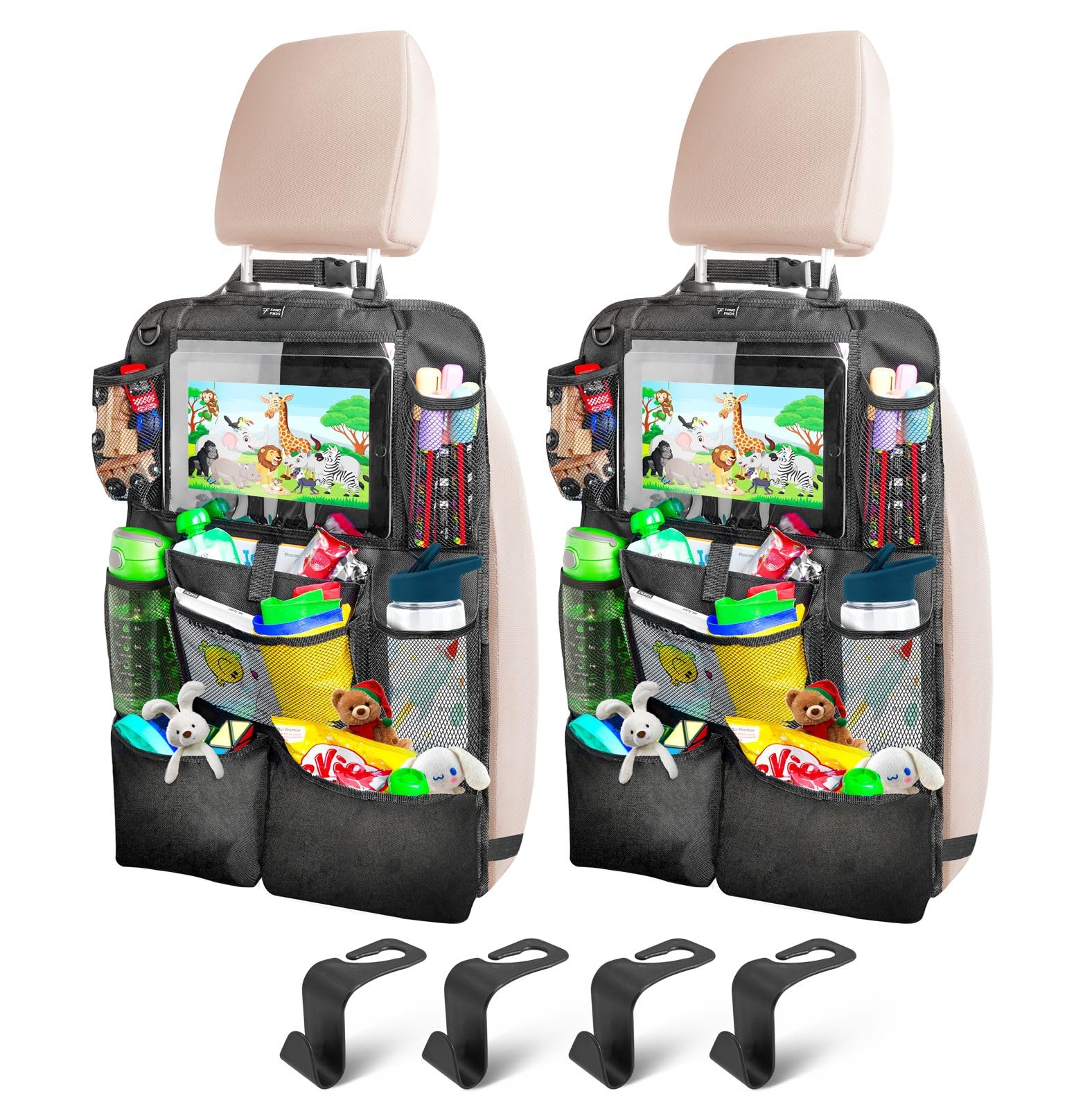
Master the Backseat Organizer
The problem: Children need access to items during car rides, but giving them free access to bags and containers results in everything being dumped and scattered. The solution: Install a quality backseat organizer that hangs from the front seat headrests. The best organizers have multiple pockets of varying sizes, a tablet holder, and are made of durable, wipeable material. Why it works: Backseat organizers keep items visible, accessible, and contained. Children can see what's available without digging through bags. Each item has a designated pocket, making both retrieval and cleanup straightforward. Choosing the right organizer: Look for organizers with clear pockets (so children can see contents), a tablet holder with touch-screen-compatible material, and pockets sized appropriately for your children's items. Avoid organizers with too many tiny pockets—they're frustrating to use and items get stuck.
Solve the Snack Problem
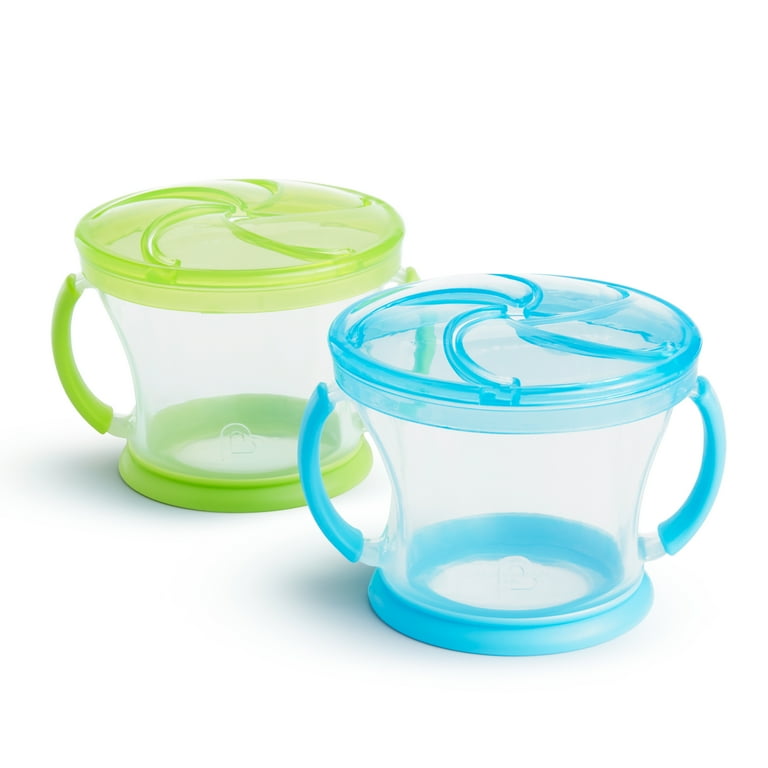
The problem: Snacks are essential for car rides with children, but they're also the primary source of mess. Crumbs, spills, and sticky residue seem inevitable. The solution: Be strategic about what snacks you allow in the car and how they're served. Some families implement a "no food in the car" policy, but for most, that's not realistic. Instead, focus on mess-minimizing choices and serving methods. Mess-minimizing snacks: Cheese sticks, whole fruits (apples, bananas), dry cereal in spill-proof containers, crackers, pretzels, squeeze pouches (less messy than cups of applesauce) Snacks to avoid: Anything chocolate (melts), anything with powder coating (cheese puffs, etc.), crumbly cookies, anything requiring dipping Serving strategies: Use spill-proof snack containers with handles that children can manage independently. Serve snacks on a small tray or placemat that catches crumbs. Keep wet wipes within reach for immediate cleanup of sticky hands. The crumb solution: Accept that some crumbs are inevitable, and make cleanup easy. A small handheld vacuum kept in the trunk allows for quick crumb removal. Some families do a weekly "vacuum day" as part of their car maintenance routine.
Organize the Trunk Strategically
The problem: The trunk becomes a dumping ground for everything—sports equipment, emergency supplies, shopping bags, strollers—until finding anything requires excavation. The solution: Divide your trunk into zones using collapsible organizers, and assign categories to each zone. The key is creating structure that prevents items from shifting and mixing during driving. Suggested zones: - Emergency zone: First aid kit, jumper cables, flashlight, basic tools, emergency blanket - Child essentials zone: Extra clothes, diapers (if applicable), backup snacks, wet wipes - Regular cargo zone: Collapsible organizer for groceries and daily items - Sports/activity zone: Bag or bin for frequently-used equipment Why it works: Zoning prevents the chaos of everything mixing together. When items have designated locations, you can find what you need quickly and return items to their proper place automatically.
Address the Paper Problem
The problem: School papers, artwork, permission slips, and receipts accumulate in the car, creating visual clutter and causing important items to get lost. The solution: Create a simple paper management system. Keep a small folder or envelope in the car specifically for papers that need to go into the house. Make transferring this folder part of your exit protocol. The system: When children hand you papers from school, they go directly into the car folder—not onto the seat, not into your bag, not onto the floor. When you arrive home, the folder comes inside and gets processed immediately (sorted, signed, filed, or recycled). Why it works: Papers are one of the sneakiest sources of car clutter because each individual paper seems insignificant. But papers accumulate rapidly and create both visual chaos and practical problems (lost permission slips, missed deadlines). A dedicated system prevents accumulation.
Create a Cleaning Kit
The problem: Messes happen in the car, but cleaning supplies are at home. By the time you get home, the mess has dried, stained, or been forgotten. The solution: Keep a small cleaning kit in your car for immediate mess response. Store it in the trunk or under a seat where it's accessible but not in the way. Essential kit contents: - Pack of wet wipes (for hands, faces, and surface cleanup) - Small pack of paper towels or microfiber cloths - Stain remover pen or spray - Small plastic bags (for containing wet or dirty items) - Hand sanitizer Why it works: Immediate response to messes prevents stains and makes cleanup easier. A juice spill wiped up immediately is a minor inconvenience; the same spill left for hours becomes a sticky, stained disaster.
Schedule Regular Maintenance
The problem: Even with good systems, cars need regular attention. Without scheduled maintenance, small messes accumulate until the car feels overwhelming. The solution: Schedule two types of regular car maintenance: quick daily/weekly maintenance and deeper monthly cleaning. Daily habit (30 seconds): Remove all trash and personal items when exiting the car. This should be automatic for every family member. Weekly reset (5 minutes): Once per week, do a quick car reset. Remove any items that accumulated despite daily habits, wipe down surfaces, shake out floor mats, and restock supplies (wipes, snacks, etc.). Monthly deep clean (30 minutes): Once per month, do a more thorough cleaning. Vacuum all surfaces including under seats, wipe down all hard surfaces, clean windows, wash seat protectors, and assess what's working and what needs adjustment in your organization systems. Why it works: Scheduled maintenance prevents the accumulation that makes organization feel impossible. When you know a reset is coming, small messes feel manageable rather than overwhelming.
Teaching Children Organization Skills
Perhaps the most valuable outcome of car organization isn't a cleaner vehicle—it's the life skills your children develop in the process. Organization is a learned skill, and the family car provides daily opportunities for practice.
Start with ownership. Give each child responsibility for specific aspects of car organization. A three-year-old can be responsible for putting their water bottle in its designated spot. A six-year-old can manage their own activity kit. An eight-year-old can be responsible for the weekly car vacuum. When children have ownership, they develop both competence and investment.
Make expectations clear and consistent. Children thrive with clear expectations. "Take everything you brought" is a clear expectation. "Keep the car clean" is vague and sets children up for failure. Be specific about what you expect, and be consistent in enforcing those expectations.
Use natural consequences. If a child leaves their favorite toy in the car, they don't have it until the next car trip. If they spill a drink because they were playing with the cup, they help clean it up. Natural consequences teach responsibility more effectively than lectures.
Celebrate success. Notice and acknowledge when children follow the systems. "I noticed you put your trash in the garbage without being reminded—that's really helpful!" Positive reinforcement strengthens habits.
Age-Appropriate Responsibilities
Ages 2-3: Put items in designated spots with guidance. Ages 4-5: Follow exit protocol independently, manage simple cleanup. Ages 6-8: Responsible for personal activity kit, help with weekly reset. Ages 9+: Can take ownership of specific car organization tasks, help younger siblings.
"Children learn organization not from what we tell them, but from what they see us do. The family car is a classroom for life skills."
— Child Development Perspective
When Systems Fail: Troubleshooting Common Problems
Even the best systems encounter obstacles. Here's how to address the most common car organization challenges:
"My kids won't follow the rules." This usually indicates one of two problems: the rules aren't clear enough, or there are no consequences for not following them. Revisit your expectations—are they specific and age-appropriate? Then ensure consistent follow-through. If the rule is "take everything when you exit," that means every time, not just when it's convenient.
"We don't have time for maintenance." If weekly maintenance feels impossible, your systems may be too complicated. Simplify. The goal is sustainability, not perfection. A five-minute weekly reset should be achievable for any family. If it's not, reduce the scope until it is.
"The car gets messy again immediately." This often happens when organization relies on willpower rather than systems. Review your setup: Is the trash container accessible? Are activity kits contained? Is the exit protocol being followed? Usually, rapid re-messification indicates a system gap rather than a behavior problem.
"My partner/co-parent doesn't follow the system." Car organization works best when all adults are aligned. Have a conversation about shared expectations and the benefits of organization. Focus on the practical benefits (less stress, easier to find things, better modeling for children) rather than criticism of current habits.
Enjoying this article?
Get more parenting insights, product recommendations, and exclusive content delivered to your inbox.
Key Takeaways
- 1Car clutter affects stress levels and life satisfaction—organization benefits the whole family's wellbeing
- 2Systems beat willpower: create structures that make organization automatic rather than effortful
- 3The exit protocol (everyone takes everything) prevents 80% of car clutter
- 4Involve children in organization—it teaches valuable life skills while maintaining the system
- 5Schedule regular maintenance: daily trash removal, weekly reset, monthly deep clean
- 6Prevention (seat protectors, contained snacks) is easier than remediation
- 7Start with foundational strategies before adding advanced systems