Road Trip Essentials: A Child Psychologist's Guide to Peaceful Family Travel
Share This Article
Last summer, we attempted a twelve-hour drive to visit family. By hour three, my daughter was melting down, snacks were ground into the seat fabric, and I was seriously considering turning around. It wasn't the trip I'd imagined—the one with audiobooks and peaceful scenery and maybe even a nap. It was chaos.
That experience forced me to rethink everything about how we approach car travel. As a child psychologist, I know that children aren't designed to sit still for hours. Their nervous systems need movement, novelty, and regulation support. The question isn't how to make them behave in the car—it's how to set up the environment so everyone can cope. Here's what I've learned actually works.
"Children don't misbehave in cars—they dysregulate. The environment either supports regulation or undermines it."
— Dr. Ely
Why Car Travel Is Hard for Kids
Before we talk about what to pack, we need to understand why long drives are genuinely difficult for children. It's not about being "good" or "bad" travelers—it's about developmental reality.
Children's vestibular systems (the inner ear mechanism that processes movement and balance) are still developing. Sitting still while the world moves past them creates sensory confusion. Their proprioceptive systems (the sense of where their body is in space) get almost no input when they're strapped into a car seat. And their nervous systems, which are wired to move and explore, are being asked to do the opposite for hours.
Add in disrupted routines, unfamiliar environments, and the anticipation of arrival, and you have a recipe for dysregulation. The goal isn't to prevent all difficult moments—that's unrealistic. The goal is to reduce friction and support regulation so everyone arrives in reasonable shape.
Developmental Reality
Children under 5 can typically handle 2-3 hours of car time before needing a significant break. Children 5-10 can manage 3-4 hours. Teenagers can handle longer stretches but still benefit from movement breaks. Plan your stops accordingly—not as delays, but as essential parts of the journey.
The Regulation Framework
I think about car travel through three lenses: sensory support, predictability, and connection. Each one matters.
Sensory support means providing appropriate input to help children's nervous systems stay regulated. This includes movement during stops, fidget tools during driving, and managing visual and auditory stimulation.
Predictability means children know what to expect. When will we stop? How much longer? What happens when we arrive? Uncertainty is dysregulating. Clear communication and visual supports help.
Connection means maintaining emotional attunement even when you're focused on driving. Brief check-ins, shared experiences (like pointing out interesting sights), and responsive presence matter more than entertainment.
When all three are addressed, car travel becomes manageable. When any one is neglected, problems compound.
The Three Pillars of Car Travel
"The journey is part of the destination."
— Travel Wisdom
Before You Leave: Setup That Matters
The work of a successful road trip happens before you get in the car. These preparations make everything else easier:
Timing Strategy
Leave early morning or during naptime if your child still naps. Driving during natural sleep windows means fewer waking hours to manage. For longer trips, consider breaking the drive across two days rather than pushing through—the hotel cost is often worth the reduced stress.
Car Organization
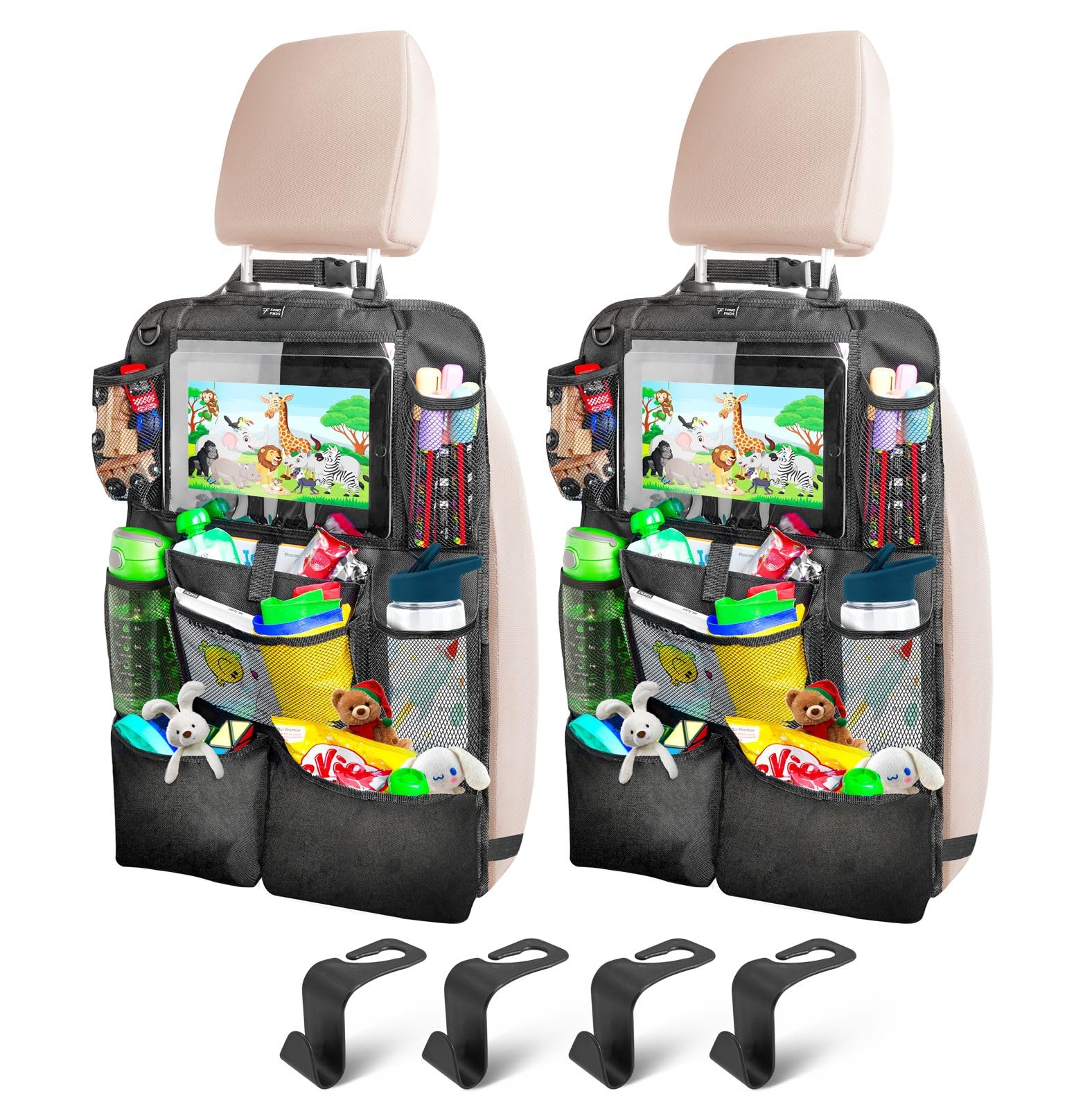
Create zones within reach. A small bag or organizer attached to the seat back keeps essentials accessible without the "I dropped it!" cycle. Prepare individual activity bags for each child rather than a shared bin—reduces conflict and gives each child ownership.
Snack Strategy
Pre-portion snacks into containers or bags. Avoid anything that requires refrigeration, makes significant mess, or is a choking hazard while seated. Focus on protein and complex carbs over sugar—blood sugar crashes make regulation harder. Bring more water than you think you need.
Stop Planning
Map out stops every 2-3 hours with space for children to move. Rest areas with grass are better than gas stations. Parks along the route are ideal. Build in 20-30 minutes per stop—rushing through defeats the purpose. Some families find success with "movement challenges" at each stop (run to that tree and back, do 10 jumping jacks).
The Night Before
Pack the car the night before departure. Load snacks, activities, and comfort items so morning is calm. Rushed departures set a dysregulated tone for the entire trip. If possible, have children help pack their own activity bags—it builds investment and reduces the "I wanted the OTHER toy" problem.
Screen Time: A Nuanced Approach
Let's address the elephant in the car. Screens are neither saviors nor villains—they're tools that can be used thoughtfully or problematically.
Strategic Screen Use
Saving screens for the hardest stretches (the last hour before arrival, traffic jams, post-nap grogginess) preserves their effectiveness. If screens are available from minute one, you've lost your most powerful regulation tool when you need it most.
Audio Alternatives
Audiobooks and podcasts engage children without the visual fixation of screens. They also allow for shared family experience—everyone listening together creates connection. Age-appropriate podcasts and serialized audiobooks work especially well for longer trips.
Unlimited Screen Access
Screens from departure to arrival often backfires. Children become more dysregulated when screens end, transitions are harder, and you've eliminated your best tool for difficult moments. The "just keep them quiet" approach usually creates more problems than it solves.
The Screen Budget
Consider giving children a "screen budget" for the trip—a set amount of time they can use however they choose. This teaches self-regulation and prevents the constant negotiation. For a 6-hour drive, 2 hours of screen time is reasonable. Let them decide when to use it.
What Actually Works: Tested Recommendations
These are products and approaches that have survived real family road trips. They're not the only options, but they're reliably useful:
What I'd Skip
Some popular road trip recommendations consistently create more problems than they solve:
When Things Go Wrong
Even with perfect preparation, difficult moments happen. Here's how to handle them:
For meltdowns: Pull over if safely possible. A dysregulated child in a moving car is not going to calm down through logic or distraction. Stop, get out, offer movement and connection, then resume when everyone is regulated. Yes, this adds time. It's still faster than pushing through.
For sibling conflict: Separate what you can (headphones, physical barriers) and address what you can't. Sometimes the answer is stopping for a movement break even if it's "not time yet." Conflict often signals dysregulation, not bad behavior.
For "are we there yet?": Visual supports help. A simple map with stickers to mark progress, a countdown of stops remaining, or a timer showing time until the next break. Uncertainty is dysregulating—information helps.
For your own dysregulation: You matter too. If you're escalating, everyone escalates. Pull over, take a breath, get a coffee. Your regulation is the foundation for everyone else's.
The Repair
After a difficult stretch, acknowledge it. "That was hard for everyone. We made it through." This teaches children that difficult moments are survivable and that ruptures can be repaired. It also models emotional honesty.
Real-Life Parent Test
Let me be honest about what this approach requires:
Preparation time: Moderate. You'll need to pack thoughtfully, plan stops, and organize the car. This takes 1-2 hours the day before departure.
During the trip: Active engagement. This isn't a "set it and forget it" approach. You'll need to monitor, adjust, and respond throughout the drive.
Best for parents who: Value connection over quiet. Can tolerate some noise and mess. Are willing to stop when needed rather than push through.
Not ideal if: Your primary goal is children who are silent and still. You're unwilling to adjust plans based on children's needs. Stopping feels like failure rather than strategy.
The payoff is arriving at your destination with everyone in reasonable shape—and maybe even some positive memories of the journey itself.
Honest Effort Assessment
The Bottom Line
Road trips with children are never going to be effortless. But they can be manageable, and even enjoyable, when you approach them with realistic expectations and appropriate support. The key shifts: Think regulation, not behavior. Plan for breaks, not endurance. Prioritize connection over entertainment. And remember that arriving 30 minutes later but in good shape is always better than arriving on time but dysregulated. Our road trips now look different. We stop more. We listen to audiobooks together. We have movement challenges at rest areas. And while there are still difficult moments, they're moments—not the entire trip. That twelve-hour drive I mentioned? We did it again last month. It took fourteen hours with all our stops. And it was genuinely fine. Everyone arrived ready to enjoy the visit rather than recover from the journey. That's the goal. Not perfection—just sustainable family travel.
Enjoying this article?
Get more parenting insights, product recommendations, and exclusive content delivered to your inbox.
Key Takeaways
- 1Children dysregulate in cars due to developmental factors, not bad behavior
- 2Plan stops every 2-3 hours with genuine movement opportunities
- 3Save screens for the hardest stretches rather than using them from the start
- 4Preparation the night before sets a calm tone for departure
- 5Shared audio experiences maintain connection better than individual entertainment
- 6Stopping when needed is strategy, not failure